
Success Story
How Philips Home Appliances Scaled with AdSwift.
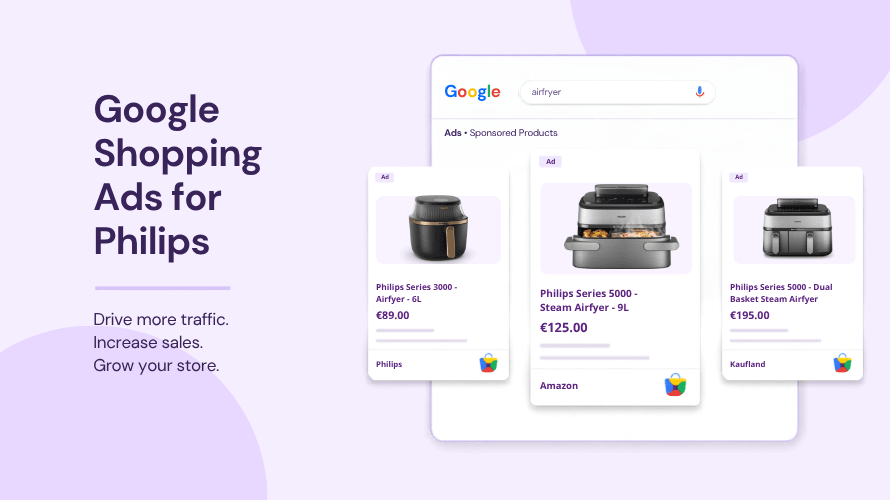
Over the years, Philips Home Appliances has adopted a hybrid marketplace selling model to maximise sales and margins. By combining first-party (1P/Vendor Central) and third-party (3P/Seller Central) strategies across major marketplaces, Philips can apply the right model to different parts of its product catalogue.
High-volume and lower-margin products can benefit from the scale of a 1P model, while a 3P approach gives Philips greater control over pricing and inventory for higher-margin products, price-sensitive categories and new product launches.
The challenge
Philips Home Appliances was already achieving strong results with on-site Sponsored Products across major marketplaces, including Bol, Kaufland and Amazon. However, further growth was becoming increasingly difficult as on-site CPCs continued to rise.
The next challenge was clear: accelerate product velocity, reduce customer acquisition costs and reach new audiences beyond the marketplaces, without disrupting existing D2C activities.
The Approach
Using AdSwift, Philips developed a scalable, performance-driven approach that adds Google Shopping as an external source of high-intent traffic.
Through the AdSwift platform, Philips can activate measurable Google Shopping campaigns in partnership with a leading Google Premium CSS partner. Traffic can be directed straight to selected product detail pages, both on Philips’ D2C webshop and across the major marketplaces where its products are available.
This gives Philips more control over off-site product exposure, reducing its dependence on each marketplace’s internal advertising ecosystem. Teams can decide which products to promote, when to promote them, how much to spend and which marketplace or D2C store should receive the traffic.
The strategy is built around clearly defined performance KPIs and product tiers. These combine factors such as market leader products, category growth potential, strategic relevance, share of visibility, repeat purchases, stock levels, seasonality and margins.
By combining high-intent external traffic with its hybrid marketplace strategy, Philips can promote products where the commercial conditions are most favourable at any given moment. This helps increase product visibility and velocity while keeping customer acquisition costs under control.
This approach also allowed Philips to influence product selection and traffic volumes independently of whether it owns the Buy Box or not.
AdSwift’s external traffic approach is a pathway to sustained and scalable growth for Philips. It gives us prime positioning and enables us to (re)engage during the crucial consideration phase — all based on data.
Results
By adding Google Shopping as an external traffic source, Philips Home Appliances was able to expand its reach, accelerate product velocity and reduce customer acquisition costs compared with on-site marketplace advertising.
During a 120-day campaign period, AdSwift redirected 480,003 unique visitors directly to branded product detail pages on several European marketplaces and their D2C webshop.
With an average CPC five times lower than on-site advertising, Philips significantly reduced the cost of attracting potential customers. An average 30% add-to-basket rate also demonstrated strong product interest and highly relevant traffic.
The campaigns helped Philips reach 56% more new-to-brand consumers through Google Shopping Ads and generated an 11% increase in revenue based on last-click attribution.
More like this
 Blogs
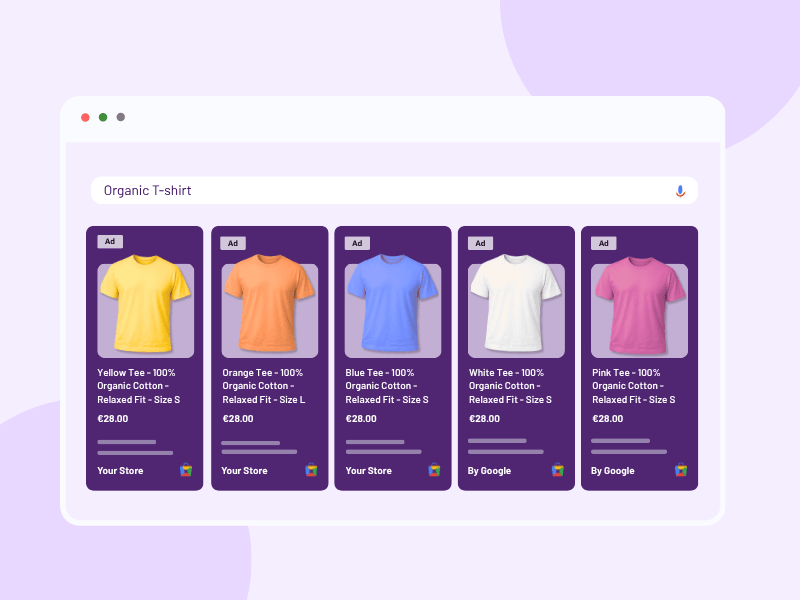
BlogsWhy CSS Partnerships Can Strengthen Your Google Shopping Strategy
Many in-house marketers still see Comparison Shopping Services (CSS) as a duplicate of their existing Google Shopping setup. From that perspective, it is easy to assume that working with a CSS partner adds little value.
Read more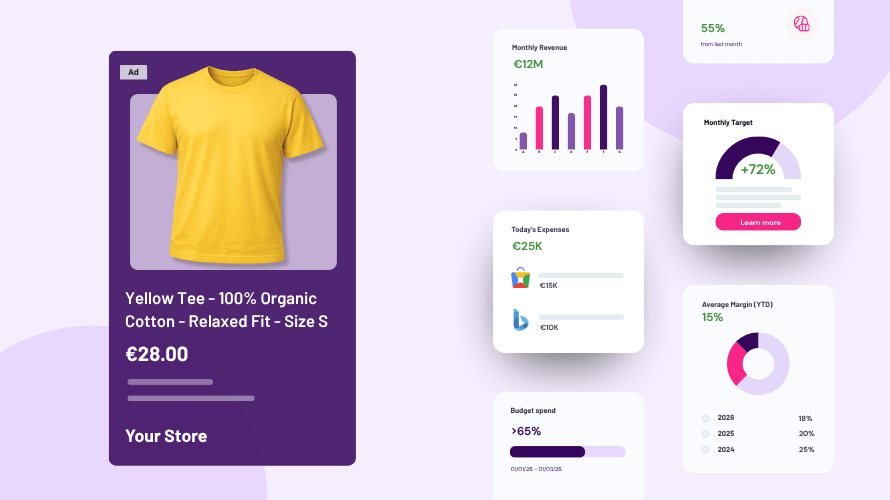 Blogs
BlogsA Smarter Way to Grow Without Getting Squeezed by CPC Inflation
Rising click costs make profitable growth harder. See how a performance-based Google Shopping connection shifts the focus from buying traffic to driving real results.
Read more