
Blog
Why CSS Partnerships Can Strengthen Your Google Shopping Strategy
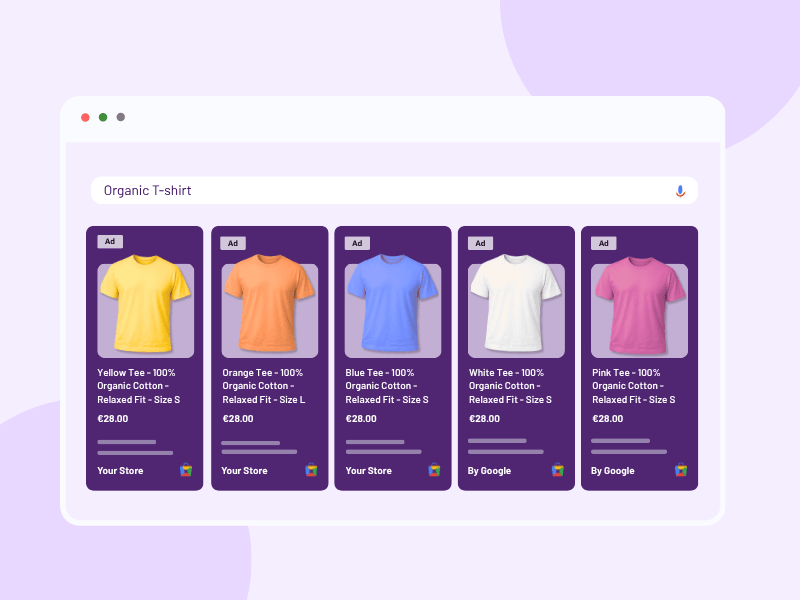
Many in-house marketers still see Comparison Shopping Services (CSS) as a duplicate of their existing Google Shopping setup. From that perspective, it is easy to assume that working with a CSS partner adds little value — or could even compete with your own campaigns.
In practice, CSS partnerships work differently.
The incentives, optimisation methods, and data foundations behind a CSS partner are not the same as those behind a brand’s own Shopping campaigns. When structured well, a CSS partnership can add incremental reach, revenue, and insights without simply duplicating what is already running.
For brands looking to scale their Google Shopping activity, that makes CSS less of a competing channel and more of an additional growth layer.
A different way to optimise
One of the biggest misconceptions around CSS is that partners optimise campaigns in the same way advertisers do.
Most brands optimise their own Shopping campaigns using a mix of first-party data, CRM insights, audience signals, and internal performance goals.
CSS partners take a different approach.
Their optimisation is often built around product-level performance, feed structure, category trends, and broader market data. Because CSS platforms can learn from large volumes of product and campaign data across categories, brands and markets, they can identify patterns and opportunities that may not be visible within a single advertiser account.
That difference matters.
Rather than copying an existing Shopping strategy, a CSS partner can uncover additional demand, new product opportunities, and different areas of performance potential.
The result can be traffic and visibility that complement what a brand is already achieving through its own campaigns.
Are you bidding against yourself?
This is one of the most common concerns we hear.
If your own Shopping campaigns and a CSS partner are both active, are they competing against each other in the same Google auction?
The short answer is no — not in the way many advertisers assume.
Google applies deduplication within the CSS auction structure. This means CSS activity is not simply treated as an extra advertiser bidding against the same merchant.
As a result, a CSS partnership is designed to work alongside an advertiser’s own campaigns rather than unnecessarily driving up competition between the two.
That distinction is important when assessing incrementality. The question is not whether CSS replaces your existing setup, but whether it can create additional value around it.
Performance incentives are different too
The commercial model behind affiliate CSS activity also changes the way campaigns are managed.
CSS partners often work on performance-based models such as CPS, CPO or CPA. In other words, compensation is linked to actual results rather than traffic alone.
That creates a clear incentive to focus on efficient, conversion-driven growth.
Instead of bidding aggressively simply to increase visibility, performance-based partners need to maintain a healthy balance between traffic costs and conversion potential.
This naturally leads to a strong focus on:
- efficient bidding
- clear ROAS targets
- product-level performance
- profitable traffic acquisition
- sustainable growth
The advertiser and CSS partner are therefore working towards a similar outcome: generating more valuable sales at a commercially viable cost.
More visibility without simply duplicating products
Google also applies product-level deduplication.
The same product is not simply shown twice in the same auction for the same search. Instead, CSS activity can create opportunities for another relevant product from the merchant’s assortment to appear.
For brands with broad product ranges, this can create valuable additional visibility.
Rather than duplicating what is already there, a CSS partner can help increase the overall presence of the advertiser’s assortment across relevant Shopping searches.
That can translate into greater impression share, more product discovery and additional traffic to the webshop.
The right partner should give you more insight, not less
Another concern for marketers is control.
Adding another partner to the mix can feel like adding another black box. But a strong CSS partnership should do the opposite: it should make performance easier to understand.
At AdSwift, accessibility and control are central to how we think about marketing technology. Marketers should be able to understand what is happening, see what is performing, and make better decisions without needing to become platform specialists.
That is why useful CSS insights can include areas such as:
- search term performance
- category and product performance
- device-level trends
- market developments
- product-level opportunities
These insights do not only improve CSS activity. They can also help advertisers sharpen their own Google Shopping strategy.
In that sense, CSS becomes more than an additional traffic source. It becomes another source of performance intelligence.
Incrementality should be proven
The strongest argument for CSS is not a theoretical one.
It is measurable performance.
That is why incrementality should always be tested through a structured framework. The goal is to understand what the CSS partnership is genuinely adding on top of existing Shopping activity.
That could include measuring:
- incremental revenue
- additional reach
- changes in impression share
- new product visibility
- customer acquisition efficiency
- overall Shopping performance
A well-designed test replaces assumptions with evidence.
And that is ultimately the best way to determine the value of any additional marketing channel.
Think of CSS as an additional growth layer
CSS partners should not be viewed as a duplicate of an existing Google Shopping setup.
They work with different data, different optimisation models, and different commercial incentives. When those elements are combined effectively, CSS can complement existing Shopping activity and open up additional growth opportunities.
For marketers, the opportunity is not simply to add another campaign.
It is to build a broader, more flexible Shopping strategy — one that creates additional visibility, generates new insights, and helps unlock sustainable growth.
Moreover, with the right setup, that extra complexity does not need to become extra work.
That is exactly where AdSwift comes in: making advanced marketing opportunities easier to activate, understand, and control.
More like this
 Blogs
BlogsA Smarter Way to Grow Without Getting Squeezed by CPC Inflation
Rising click costs make profitable growth harder. See how a performance-based Google Shopping connection shifts the focus from buying traffic to driving real results.
Read more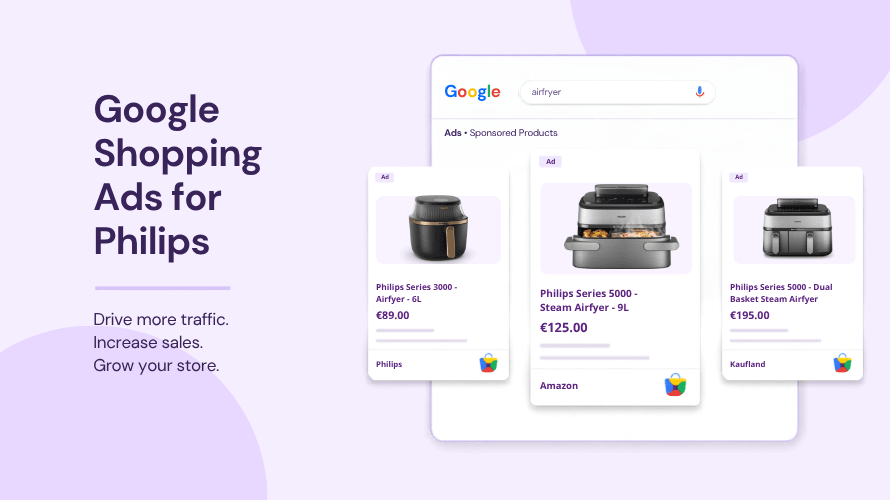 Success Stories
How Philips Home Appliances Scaled with AdSwift.
Using AdSwift, Philips developed a scalable, performance-driven approach that adds Google Shopping as an external source of high-intent traffic.
Read more